
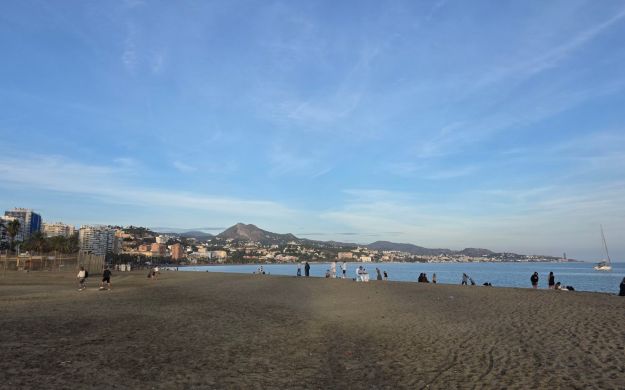
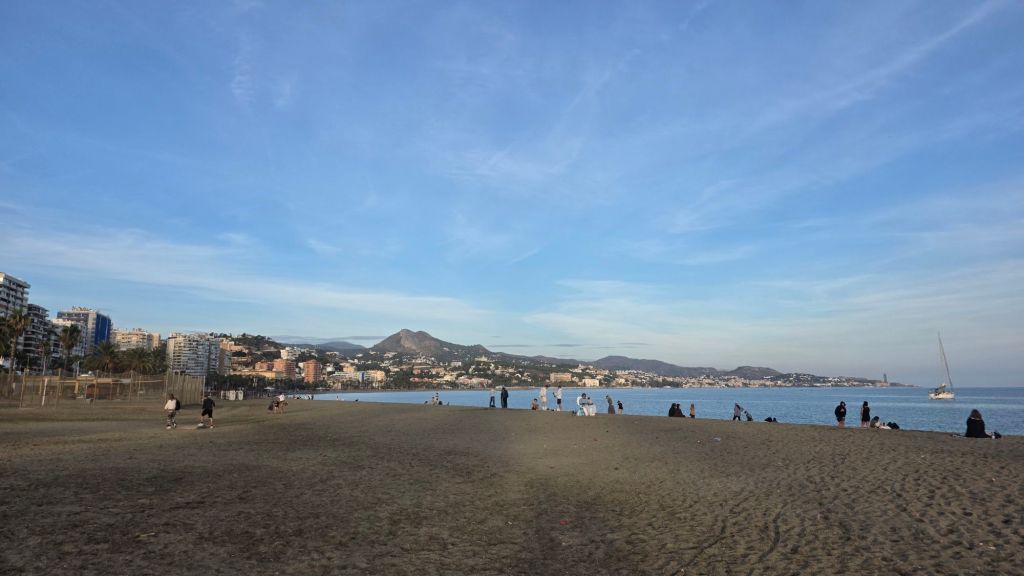
It’s 5:40 am. The sound of drunks outside stumbling and arguing on the way home reverberates up through my apartment window. I’m lying in bed in a rented apartment with a stomach full of Coco Pops (my preferred race breakfast for the last couple of years). It’s got 84 g of carbohydrates per 100 g, and it’s low fibre. I’m in Malaga, Spain, for the Malaga Marathon in just under 3 hours. This is the culmination of training which began in April 2026 after I completed the Marathon des Sables and the London Marathon (for the fifth time).
I’ve been using an AI running coach, which I built myself using my knowledge of running, coupled with what works for me, and co-creating my own running plan based around a busy life (work and family in particular). I have made a programme with enough fat in it to allow me to get marathon specificity, despite life getting in the way from time to time.
My marathon training began with a build phase: specific speed work, getting me used to running at faster paces and identifying that my cadence was too low at about 150 steps per minute. Within a few weeks, I had corrected that, and now I run at about 160 to 165 SPM. I then started building my mileage and identified the Vitality 10,000-metre race (Vitality 10K) and the Dorney Lake half marathon as viable B races.
Dorney proved to me that I could train well. It was an okay result, but I continued to tweak my training. The Vitality 10K proved to me that I could race at speed. In my mid-40s, I set a personal best for both my 10K time as well as my outdoor 5K time in the same race.
Things that I’ve learned during the specific marathon training:
Fitting it into life
How the training works
I flew out from Gatwick to Malaga early Friday morning with a good friend, Sam, who’s doing the half marathon. We’ve managed to do a fair bit of sightseeing and get registered at the marathon expo, as well as doing a run on Friday and another shakeout on Saturday (where I was joined by Omar, who’s doing the full marathon).
We’ve each got our own marathon plans, but it’s still nice knowing that I’m running with company dotted somewhere along the course. I’ve been borderline monk-like compared to my usual self during training, particularly in the last few months: fewer drinks, fewer late nights, and much more focus on recovery. This means prioritising high-quality sleep.
I’ve investigated age-related supplements. I’m focused on the basics. Overall, my approach to this marathon has been maximal gains. For so long, I’ve been trying to eke out marginal gains, but when I have looked at my race times historically, I have to confess: I’m not an international athlete. Therefore, why not go after the maximal gains? My performance at the Vitality 10K showed me that it is possible to break through my own personal barriers. With a little bit of luck, in a few hours’ time, I will prove that my training regime has worked and the sacrifices were worth it.
I’m not sure how the race will go, but at least I know I put in the work.
Keep training hard
GeekintheHills